
If you’re an Overseas Pakistani, there’s good news when it comes to purchasing or selling property in Pakistan. Under Sections 236C and 236K of the Income Tax Ordinance, 2001, as amended by the Finance Act, 2025, you can benefit from “filer” tax rates — even if you’re not a return filer — subject to specific conditions.
Let’s break it all down so you can benefit from this relief.
Who Qualifies for Filer Rate Despite Being a Non-Filer?
You may avail the filer tax rate for property transactions if you are:
✅ An Overseas Pakistani holding a
POC (Pakistan Origin Card) or
NICOP (National Identity Card for Overseas Pakistanis)
AND
✅ A non-resident in Pakistan, i.e., you spent less than 183 days in Pakistan during the financial year.
2026 Tax Rates Under Section 236K (Buyer of Property)
| Fair Market Value of Property | Filer | Late Filer | Non-Filer |
|---|---|---|---|
| Up to Rs. 50 million | 1.5% | 4.5% | 10.5% |
| Rs. 50m – Rs. 100 million | 2% | 5.5% | 14.5% |
| Above Rs. 100 million | 2.5% | 6.5% | 18.5% |
2026 Tax Rates Under Section 236C (Seller of Property)
| Gross Consideration Received | Filer | Late Filer | Non-Filer |
|---|---|---|---|
| Up to Rs. 50 million | 4.5% | 7.5% | 11.5% |
| Rs. 50m – Rs. 100 million | 5% | 8.5% | 11.5% |
| Above Rs. 100 million | 5.5% | 9.5% | 11.5% |
How Can Overseas Pakistanis Avail the Filer Rate?
Here’s the step-by-step procedure to avail the filer rate even as a non-filer:
🔹 Step 1: Start on FBR Portal
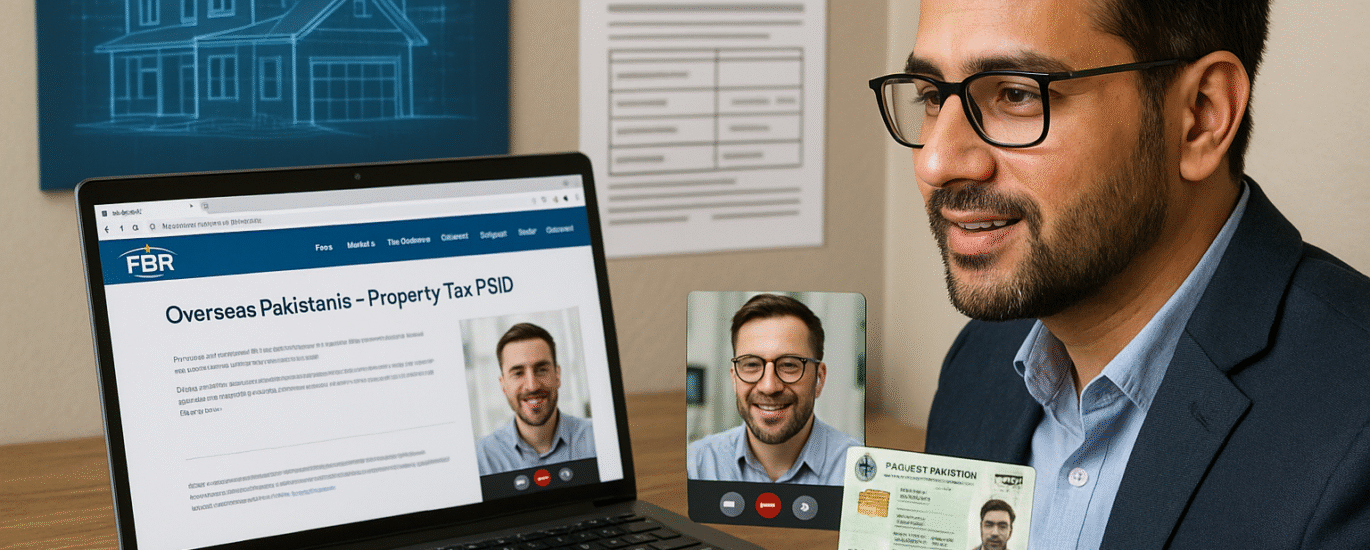
The relevant Registrar, Housing Society, or Property Transfer Authority should go to FBR’s portal and click on “Overseas Pakistanis” to generate a PSID (Payment Slip ID).
🔹 Step 2: Complete Online Form
You will be redirected to a form to:
Enter POC/NICOP number
System will auto-fetch your name and address
Upload scanned copy of POC/NICOP
Declare residency status
Upload supporting documents showing non-residency
🔹 Step 3: Verification by Commissioner
The system routes the PSID to the concerned Commissioner (IRIS) for digital review.
🔹 Step 4: Approval
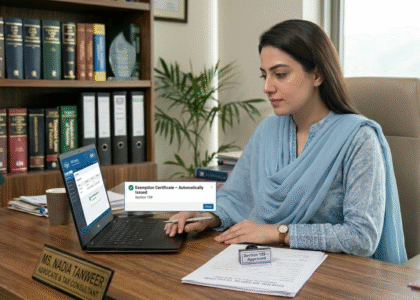
Upon document verification, the Commissioner approves the case. Notification is sent to the applicant by SMS and email.
🔹 Step 5: Pay at Filer Rate
Once approved, the system allows you to pay advance tax at filer rate under sections 236C and 236K, despite your non-filer status.
20 FAQs – Tax Rates Under Section 236C & 236K
Q1: What if I’m not a filer but I live abroad and hold NICOP?
A: You’re eligible for filer rates under sections 236C and 236K if you’re a non-resident and hold NICOP or POC.
Q2: What does “non-resident” mean for this purpose?
A: A person who stays less than 183 days in Pakistan during the tax year.
Q3: Can I buy and sell property at filer rate as an overseas Pakistani?
A: Yes, if you meet the above conditions and complete the verification on FBR’s portal.
Q4: Do I need to file a return to get filer status?
A: Not necessarily. As an Overseas Pakistani, you can get filer rate benefit without filing a return, using POC/NICOP verification.
Q5: What is the benefit of filer rate?
A: Filer rate is significantly lower than late-filer or non-filer rates, potentially saving millions of rupees on large transactions.
Q6: What happens if I don’t follow this procedure?
A: You may have to pay tax at the non-filer rate, which is up to 18.5% for buyers and 11.5% for sellers.
Q7: Can I use the same process multiple times?
A: Yes, each time you transact, you can apply for filer rate under the same criteria.
Q8: Do local Pakistani residents with NICOP get this benefit?
A: No. The filer rate applies only to non-residents holding NICOP or POC.
Q9: What if I don’t receive the email/SMS confirmation?
A: Contact the Commissioner IRIS through FBR helpline or revisit your application dashboard.
Q10: Is this process safe and secure?
A: Yes. The verification is done digitally through IRIS, FBR’s official tax portal.
Q11: Can Overseas Pakistanis avail filer rate if they don’t have POC or NICOP?
A: No, the benefit of filer rate without return filing is only available to those holding a POC or NICOP and being non-resident.
Q12: Can an Overseas Pakistani claim filer rate on both purchase and sale of property?
A: Yes, if they meet the criteria for POC/NICOP and non-resident status, they can claim filer rate under both Section 236C and 236K.
Q13: Can this process be completed entirely online?
A: Yes, the PSID creation and approval process for availing filer rate is completed digitally via FBR’s web portal and IRIS system.
Q14: How long does it take to get approval from the Commissioner?
A: Usually a few working days, depending on the Commissioner’s workload and the completeness of documents submitted.
Q15: What documents are needed to prove non-residency?
A: Documents like entry/exit stamps, passport travel history, or employer certification abroad may be submitted to support non-resident status.
Q16: Can someone else (e.g., relative or property dealer) apply on behalf of the Overseas Pakistani?
A: The system allows the Registrar, Housing Society, or other concerned authority to initiate the PSID, but the individual must upload their own documents.
Q17: What happens if someone falsely claims to be non-resident to get the filer rate?
A: Submitting false declarations may lead to penalties, recovery of tax shortfall, and prosecution under the Income Tax Ordinance.
Q18: Can a person with dual nationality use this facility?
A: Yes, as long as they have POC/NICOP and meet the non-residency condition, dual nationals can avail the benefit.
Q19: Will the filer status reflect permanently after using this option?
A: No, this process allows temporary application of filer rate for a specific transaction, not permanent inclusion in the Active Taxpayers List (ATL).
Q20: Do these rules apply to commercial properties too?
A: Yes, the advance tax under Sections 236C and 236K applies to all types of immovable properties, including residential and commercial, based on transaction value.
With rising property values and strict tax enforcement, Sections 236C and 236K can significantly impact your investment costs. Fortunately, the Government has provided a practical and beneficial pathway for Overseas Pakistanis to avoid non-filer penalties and enjoy reduced tax burdens — legally.